Computational Health

The Making of a Movement in Women’s Brain Health

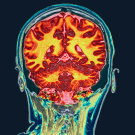
For decades, neuroscience has overlooked a fundamental aspect of human biology: the female brain. 

The intricate relationships between brain function and hormonal shifts—throughout menstrual cycles, pregnancy, perimenopause, and beyond—have largely remained uncharted. 

For example, how is it that nearly 70 percent of Alzheimer’s patients are women, yet less than 0.5 percent of neuroimaging studies in the past 30 years have considered female-specific biological factors? 

A New Era In Dementia Care

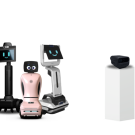
Dementia affects nearly 11 million Americans, with that number expected to double by 2050. Families and caregivers are faced with the difficult challenge of managing agitation and emotional distress in individuals with dementia, often leading to increased falls, hospitalizations and caregiver burnout.

But what if cutting-edge technology could help ease this burden?

UC Noyce Initiative Researcher Named AAAS Fellow

UC Noyce Initiative researcher Chen-Nee Chuah was recently (April 18) selected to be a fellow of the American Association for the Advancement of Science, or AAAS, the world's largest multidisciplinary scientific society. The prestigious honor is a lifetime achievement and is reserved for researchers who have made significant advancements to science or its applications.

Women First

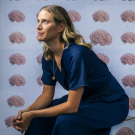
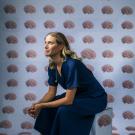
Much of Emily Jacobs’ research focuses on how sex hormones — estrogen, progesterone, testosterone — affect the brain. Where are they acting? On what circuits? And over what time span?

She studies these changes in both men and women, but Jacobs, a neuroscientist and a professor of psychological and brain sciences, is keenly aware that the female brain has, historically, been overlooked.

Making Prosthetics More Lifelike


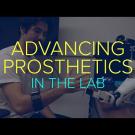
David Brockman, a retired CalFire captain and avid outdoorsman, built a deck in the backyard of his home last year, without the use of his dominant right hand, which he lost in an accident. The prosthetic hand he used instead was a crude but functional steel hook-and-harness device.

Brockman has tried other artificial limbs, including a high-tech prosthesis called a myoelectric. It looks like a hand and works by using electrical signals from muscles in the forearm. But that one just didn’t work for him.

UC Noyce Initiative Researcher Named Chancellor's Fellow

Congratulations to UC Noyce Initiative researcher Brittany Dugger, Ph.D. for being named one of the 2024 Chancellor's Fellows for UC Davis. Dugger was one of nine early career academics who were given this title in recognition of doing exemplary work.

“These outstanding faculty members are some of our brightest and most promising scholars,” UC Davis Chancellor Gary S. May said. “I know they will continue to impress and shine a light on the groundbreaking work happening here at UC Davis. I expect this recognition and support will help propel them to even greater heights.”